
Country guide — Americas
 Expat insurance and health insurance in Anguilla
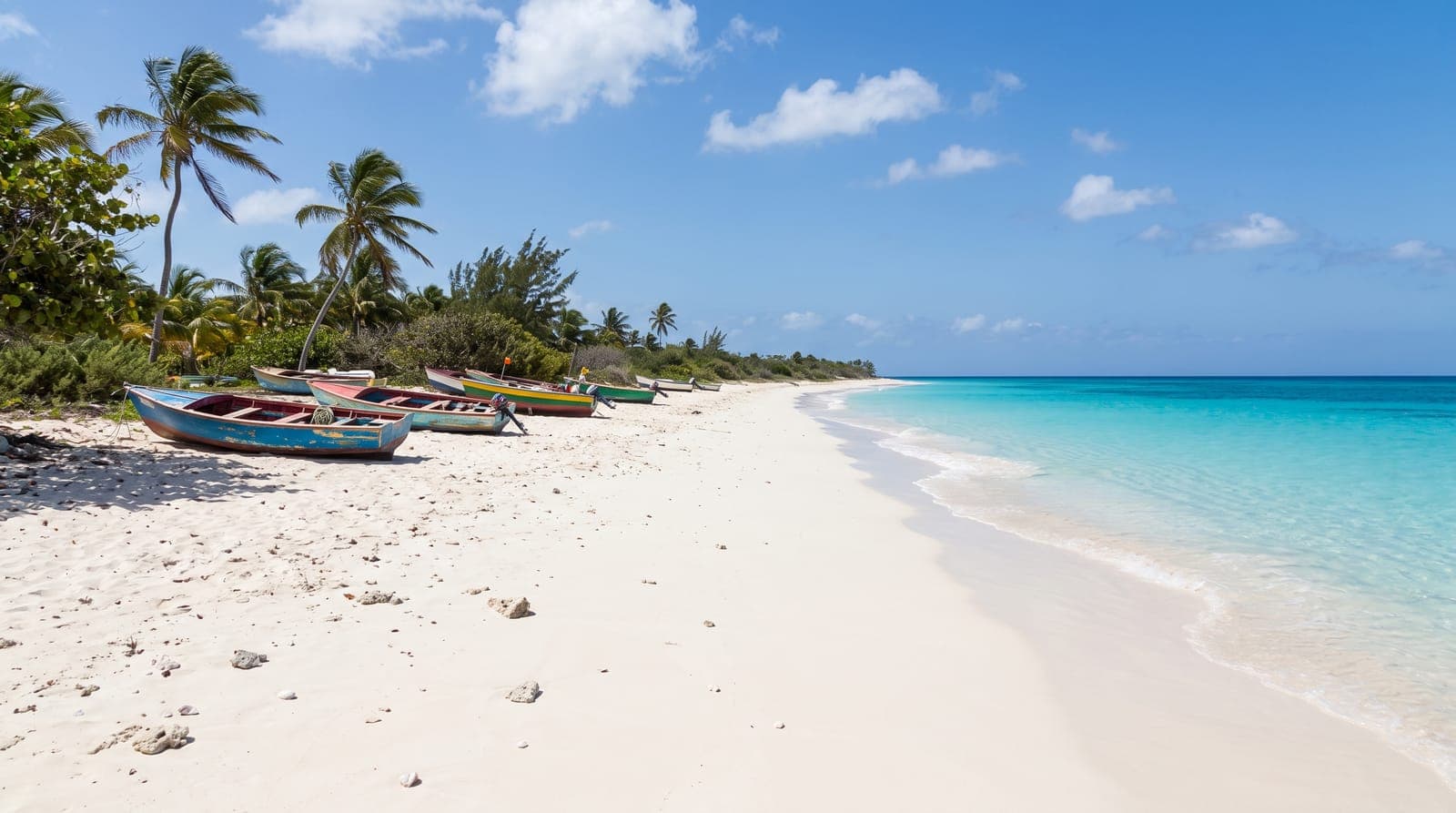
In short
Anguilla is a British Overseas Territory in the Caribbean: the local government describes itself this way in its budget speech. French residents depend on the French Embassy in Saint Lucia (Castries), which states that it is responsible for Anguilla; the France Diplomatie travel advice list includes no page for this territory at the date of consultation. The government's visa portal lists France among the countries whose nationals do not need a visa, and the tourist board requires a passport valid beyond departure as well as return or onward tickets; working requires a work permit processed by the Department of Labour. CLEISS lists no social security agreement between France and Anguilla, and the BOFiP list of tax treaties in force does not include it: only a tax information exchange agreement, of 30 December 2010, entered into force on 15 December 2011. On site, no compulsory public health insurance scheme was identified in the official sources read: the national social protection policy of August 2018 presents the lack of adequate health insurance as a gap, and the Health Authority of Anguilla's annual report mentions more than 7,000 insurer reimbursement claims processed over one year. Public care is delivered by the Health Authority of Anguilla, which runs the Princess Alexandra Hospital and the district health centres; 911 is the emergency number.
Service being launched: an advisor reviews your request and gets back to you to clarify your needs.
Everything about Anguilla
- Living there →Pros and cons, cities, cost of living, housing, settling in.
- Work and economy →Jobs for foreigners, work permits, salaries, the economy.
- Healthcare system →Public and private care, hospitals, local health insurance, access to care.
- Medical reimbursements →Who pays for what, by situation: employee, self-employed, retiree, student.
- Retiring there →Visa, pension taxation, healthcare for retirees, S1 form, cost of living.

Key figures
- Population: about 16,000 inhabitants (Anguilla Statistics Department).
- No France-Anguilla social security agreement: the territory appears neither in the list of agreements in force nor in the CLEISS list of foreign schemes.
- No double taxation treaty: only a tax information exchange agreement (agreement of 30 December 2010, in force since 15 December 2011, decree no. 2012-57 of 18 January 2012) appears in the BOFiP lists.
- Local social security: contributions of 5.5% from the employee and 5.5% from the employer (Social Security Board); Universal Social Levy of 3% borne by the employee above EC$2,000 a month, with an equivalent amount borne by the employer (Inland Revenue Department).
- Public care: annual hospital activity runs to hundreds of admissions and thousands of emergency department visits, with patients transferred abroad for the most serious care (annual report of the Health Authority of Anguilla).

Local healthcare system
Anguilla's health system rests on public care delivered by a single body, the Health Authority of Anguilla (HAA), and on cover largely funded by private insurance. The HAA's annual report indicates that it was created in 2004 to manage primary and secondary care, delivered by district health centres and by the Princess Alexandra Hospital. The national social protection policy of August 2018, drafted by the Ministry of Health and Social Development, specifies that the HAA is funded mainly by the ministry on the basis of annual agreements. In the government organisation described in the budget speech, health policy falls under the Ministry of Health, Tourism and Sports (Department of Health Services, tel. 264 498 6630).
No compulsory public health insurance scheme was identified in the sources read. The 2018 social protection policy recalls that a National Health Fund, decided in 2008, had not yet been established and describes the lack of adequate health insurance as a critical gap in the social protection framework. No more recent text establishing such a scheme was read. The HAA, for its part, indicates that it processed more than 7,000 reimbursement claims sent to insurance companies, almost all medical: private insurance is therefore the usual way of funding care for residents who have it. The government's budget speech also presents a programme, the Junior Shield Medical Programme, offering free care to children under six, and the extension of the Medical Shield Programme to dialysis patients living in Anguilla.
The same speech provides for health investment (hospital, Western polyclinic, magnetic resonance imaging, operating theatre) and the recruitment of nurses, paramedics and anaesthetists. The World Bank does not publish the share of health spending in GDP for Anguilla: this figure is therefore not given here. For cases beyond the island's means, the HAA reported more than 400 patients transferred abroad over one year; the cost and organisation of an evacuation fall under an assistance contract (see repatriation assistance).

Legal and visa obligations
- Tourist stay: the Government of Anguilla's visa portal indicates, for France, "visa not required". The tourist board requires a passport valid beyond the departure date and return or onward tickets; immigration and customs control takes place at the Blowing Point ferry terminal or at Clayton J. Lloyd airport, and at the Sandy Ground post for private boats. The length of stay authorised for a visitor was not read; an extension is requested from the Immigration Department (form 1-1), the visitor having to leave the island when the extended period expires.
- Work: the Department of Labour processes work permits (employee, self-employed, renewal and temporary categories). The job must first have been advertised, and the file includes in particular a criminal record covering the last ten years, a recent medical certificate, four photos, proof of the employer's social security contributions, the business licence and the employer's tax certificate. A processing fee of EC$100 (about €33) is added to the permit fee, the scale of which was not read.
- Local social security: registration with the Social Security Board is compulsory for employees, employers and self-employed workers, according to the Board.
- Resident health insurance: no legal obligation to have health insurance was read on the pages consulted. Private insurance, with evacuation, remains for the resident to take out; the government publishes, in the pages read, no list of minimum cover.
- Student: the European Health Insurance Card does not exist for this territory, which lies outside the European Union; a student insurance or the CFE youth plan should be compared. The Immigration Department publishes a student permit form.
- Seconded employee : continuation of the French scheme, according to CLEISS, for three years renewable once, with reimbursement within the limit of what the French scheme provides on paid invoices (form S 3125c). Membership of the Caisse des Français de l'Étranger (CFE) remains an additional option.
- Retiree: CLEISS points to local institutions, voluntary CFE membership or private insurance; no S1 form exists, the territory not being in the European Union.
- Long-term residence: belonger status is obtained notably after fifteen years of residence (application fee of EC$200, i.e. about €66), after five years of marriage to a belonger or by descent, according to the Immigration Department; the residence by investment programme has its own conditions.
- Hurricanes: the Department of Disaster Management keeps an up-to-date list of six shelters and a preparedness guide; it recommends a family plan, supplies and documents kept safe from water.
No law requiring a resident to have private insurance was read on the pages consulted; the obligation identified is registration with the Social Security Board, which pays sickness, maternity and retirement benefits but does not reimburse care. The conversions in this page are based on the ECB reference rate and on the parity of EC$2.70 to US$1 that emerges from the minutes of the Executive Council of 21 June 2023 (EC$16.20 for US$6.00).

Cost of some medical procedures
Indicative benchmarks, not an official fee schedule: prices vary by provider, so ask for a quote before treatment.
| Procedure | Public sector | Private sector |
|---|---|---|
| Employee social security contribution (Social Security Board) | 5.5% of salary, plus 5.5% borne by the employer, since 1 January 2025; insurable earnings ceilings not read, current-year rate to be confirmed with the Board | — |
| Employee Universal Social Levy | 3% of gross salary above EC$2,000 a month (about €660), with an equivalent amount borne by the employer up to EC$12,000 of monthly salary (about €3,963); self-employed: 6% | — |
| Public care from the Health Authority of Anguilla | Rates not read on the official pages consulted; collected from the patient or their insurer | Premium varying by insurer and contract; no rate read from an official source |
| Free care for children under six | Junior Shield Medical Programme, presented in the government's budget speech; access conditions for a foreign child not read | — |
| Social Security Board sickness benefit | 60% of average insurable earnings over the previous 13 weeks, for 26 weeks, extendable by 26 weeks (Social Security Board) | — |
| Voluntary CFE membership (generic plans) | — | Main plan, youth plan and retirees' plan, with a contribution depending on country, age and family (cfe.fr) |

Social security agreements with France
The territory is not in the European Union. CLEISS cites it neither in the list of social security agreements in force with France, nor in its list of foreign schemes: the page devoted to the British scheme does not mention Anguilla either. For a temporary stay, it falls under the category "other countries or situations not covered": on site, CLEISS indicates that no cover is possible unless an agreement applies. Without an agreement, no cover is organised between funds.
- Temporary stay: reimbursement on return to France of unforeseen care only is a possibility and not an obligation, medical repatriation is not covered, and travel insurance suited to the real cost of care is advised.
- Secondment: the employee remains affiliated to the French scheme, three years renewable once; their contributions are paid in France, but they may also have to pay those of the host country, i.e., here, those of the Social Security Board and the Universal Social Levy. Care is covered within the limit of what they would have received in France (form S 3125c with paid invoices).
- Expatriation: the employee falls under the local scheme and is no longer insured in France; they can join the CFE voluntarily. Without an agreement, local insurance periods are not taken into account in calculating the French pension.
- Retiree: CLEISS recommends checking local cover, choosing the CFE or private insurance, and reminds us that a retiree who is no longer tax resident in France pays neither CSG, CRDS nor Casa.
- Taxation: the BOFiP list of tax treaties in force does not include Anguilla; the entry devoted to the United Kingdom mentions no extension to a territory. The BOFiP list of tax information exchange agreements mentions an agreement of 30 December 2010 between the French and Anguillan governments, signed as an exchange of letters in Paris on 27 December 2010 and in The Valley on 30 December 2010, in force since 15 December 2011 (decree no. 2012-57 of 18 January 2012). This agreement concerns the exchange of information; it does not replace a double taxation treaty. Tax domicile remains defined by article 4 B of the CGI (French General Tax Code; home or main place of stay, professional activity, centre of economic interests); a single criterion is enough.

Which insurance for my profile
General matrix — does not recommend any specific product or insurer.
| Profile | Regulatory constraint | Points of attention |
|---|---|---|
| Working holiday visa | No France-Anguilla working holiday programme listed in the sources consulted | Working requires a work permit processed by the Department of Labour |
| Student | No European card; student insurance or CFE youth plan to examine | Student permit to request from the Immigration Department; private insurance with evacuation to arrange |
| Seconded employee | French scheme maintained, three years renewable once (CLEISS) | Paid invoices with form S 3125c; local contributions possible; top-up insurance advised |
| Local employee | Registration with the Social Security Board (5.5% employee, 5.5% employer) and Universal Social Levy of 3% | No public care reimbursement scheme identified: private insurance to arrange; work permit requested by the employer |
| Self-employed / freelancer | Registration with the Social Security Board as self-employed; Universal Social Levy of 6% above EC$2,000 a month; CFE optional | Business licence and work permit rules to confirm with the departments concerned |
| Retiree | No S1 form; CFE or private insurance | Right of residence to confirm with the Immigration Department; spouse to be insured separately |

Hospitals and care network
- Princess Alexandra Hospital: Anguilla's public hospital, run by the Health Authority of Anguilla; remodelled and enlarged accident and emergency department, operating theatre, dialysis, diagnostic imaging and maternity (about 140 births over one year, Health Authority annual report); works announced in the budget on magnetic resonance imaging and the operating theatre.
- Health Authority of Anguilla district health centres: local primary care, including a Western Polyclinic undergoing works announced in the budget.

Practical steps
- Before departure: notify French agencies of your departure (CPAM, CAF, France Travail, pension funds) and choose your cover according to your status.
- Prepare entry: passport valid beyond the departure date, return or onward ticket, and checking nationality on the government's visa portal.
- Employee: have the employer start the work permit application with the Department of Labour before beginning work; the job must have been advertised.
- Register with the Social Security Board (James Ronald Webster Building, The Valley; tel. 264 497 2201/2); the employer (or the self-employed person) then declares the Universal Social Levy to the Inland Revenue Department.
- Take out health insurance with evacuation before arrival, as no public reimbursement scheme was identified; compare the CFE and private insurance.
- Seconded employee: request continuation of the French scheme from your employer and your fund; keep paid invoices for form S 3125c.
- Retiree: prepare health cover (CFE or private insurance) before departure and enquire about the right of residence with the Immigration Department (264 497 3994).
- Registration on the roll of French nationals living abroad via service-public, with the French Embassy in Saint Lucia.
- Hurricanes: identify your shelter on the Department of Disaster Management list, prepare a family plan and an emergency kit before the start of the hurricane season.

Frequently asked questions
Do I need a visa for a tourist stay in Anguilla?
The Government of Anguilla's visa portal indicates, for France, "visa not required". A passport valid beyond the departure date and return or onward tickets are required by the tourist board. The authorised length of stay was not read: it should be requested from the Immigration Department before departure.
Does the European Health Insurance Card work in Anguilla?
No. The territory is not in the European Union. CLEISS places it, for a temporary stay, among the "other countries or situations not covered", where no cover on site is possible. Travel insurance or international insurance with medical repatriation should be arranged.
Is there a social security agreement between France and Anguilla?
CLEISS lists none: the territory appears neither in the list of agreements in force nor in that of foreign schemes. A seconded employee keeps the French scheme for three years renewable once; other statuses fall under the local scheme, the CFE or private insurance.
Do France and Anguilla have a tax treaty?
The BOFiP list of tax treaties in force does not include Anguilla. A tax information exchange agreement, of 30 December 2010 and in force since 15 December 2011, exists, but it does not replace a double taxation treaty. Tax domicile is determined under article 4 B of the CGI.
How do you get insured in Anguilla?
No compulsory public health insurance scheme was identified in the official sources read. Public care is delivered by the Health Authority of Anguilla and paid for by the patient or their private insurer. The employee does, however, contribute to the Social Security Board, which pays cash benefits (sickness, maternity, retirement) without reimbursing care.
Where do you get treated in an emergency?
The emergency number is 911: the call reaches the police headquarters in The Valley, which directs to the ambulance service. The accident and emergency department of the Princess Alexandra Hospital, run by the Health Authority of Anguilla, handled more than 8,000 visits over one year.
Moving to Anguilla? Request a personalised study