
Country guide — Europe
 Expat insurance and health insurance in Svalbard and Jan Mayen
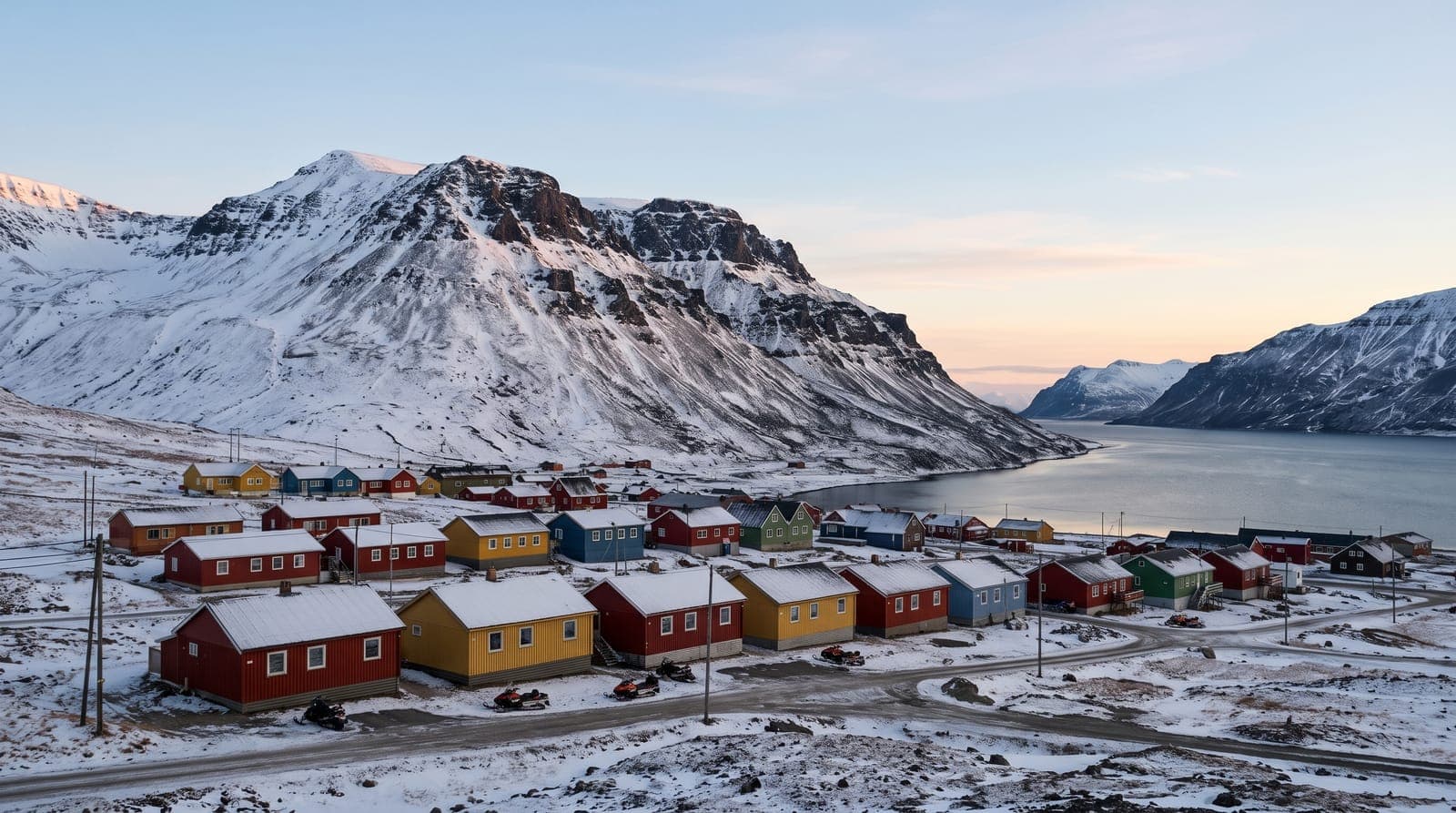
In short
Svalbard is an Arctic archipelago that is part of the Kingdom of Norway but is governed by a separate regime: the Svalbard Treaty of 9 February 1920 recognises Norwegian sovereignty and guarantees nationals of the states parties, including France, equal access, residence and economic activity (Lovdata). Jan Mayen, also Norwegian, is governed by a separate law of 1930 and is not covered by this treaty. For a French national, this means three particularities. The archipelago is outside the Schengen area. Norwegian immigration law does not apply there: no Norwegian visa or residence or work permit is required (Governor of Svalbard). The Governor may, however, refuse entry or residence to a person who lacks the means to live there or to support themselves through lawful work, and no social assistance is paid there (NAV, Longyearbyen local council). On the health side, Norwegian national insurance (folketrygden) is only accessible through a Norwegian employer established on site or through prior membership, with no voluntary enrolment possible; European social security rules do not apply to the archipelago (NAV). Longyearbyen hospital, a small emergency hospital, specifies that the EHIC covers neither care nor the air ambulance to Tromsø. CLEISS (the French centre for European and international social security liaison) lists no bilateral social security agreement between France and Norway. The French embassy in Oslo is responsible for the archipelago, and France Diplomatie (the French foreign ministry) deems an assistance contract or insurance covering medical costs and medical repatriation essential.
Service being launched: an advisor reviews your request and gets back to you to clarify your needs.
Everything about Svalbard & Jan Mayen
- Living there →Pros and cons, cities, cost of living, housing, settling in.
- Work and economy →Jobs for foreigners, work permits, salaries, the economy.
- Healthcare system →Public and private care, hospitals, local health insurance, access to care.
- Medical reimbursements →Who pays for what, by situation: employee, self-employed, retiree, student.
- Retiring there →Visa, pension taxation, healthcare for retirees, S1 form, cost of living.

Key figures
- Svalbard Treaty of 9 February 1920: Norwegian sovereignty, equal access and residence for nationals of the states parties, including France (Lovdata).
- No Norwegian visa or residence or work permit required to stay in Svalbard; the Governor may refuse entry to anyone without sufficient means (Governor of Svalbard, regulations on refusal of entry and expulsion).
- No social assistance in Svalbard; membership of Norwegian national insurance goes through a Norwegian employer on site, with no voluntary enrolment (NAV).
- No France-Norway social security agreement among the 42 bilateral agreements listed by CLEISS; European social security rules do not apply to the archipelago (NAV).
- Small community of a few thousand inhabitants, concentrated in Longyearbyen, with an emergency hospital that has no CT scanner or MRI (Longyearbyen local council, Statistics Norway).

Local healthcare system
The Svalbard health system boils down, essentially, to Longyearbyen hospital. The local council describes it as a small emergency hospital that also serves as a doctor’s surgery for residents: it offers general and specialist care with a doctor, a dentist, a physiotherapist, a public health nurse and a midwife. Its examination and surgical capacity is limited, it employs no psychologist, it has no delivery room, and the council specifies that there is neither a CT scanner nor an MRI. Serious emergencies are transferred to the mainland by air ambulance, a transport that depends on the weather and on the aircraft available. The hospital itself states that it is sized to serve mainly the local population and that it is equipped and staffed for emergencies only; patients in a complicated or life-threatening condition are transported to the University Hospital of North Norway, in Tromsø.
For emergencies, 113 (medical emergency), 112 (police) and 110 (fire brigade) are the Norwegian numbers cited by France Diplomatie; the Governor of Svalbard, who heads the archipelago’s rescue service, displays 112, and the hospital switchboard is +47 79 02 42 00. Outside the settlements, communication options are limited, hence the requirement for communication equipment when travelling in the field outside the travel zone (Governor). Necessary medicines should be carried in hand luggage in sufficient quantity: the hospital may not have the capacity to issue prescriptions, and a medicine sold in France may not exist in Norway.

Legal and visa obligations
- Travel documents: every traveller must hold a valid travel document (Governor of Svalbard). France Diplomatie points out that the archipelago is outside the Schengen area, that a valid national identity card is compulsory there and that a passport is strongly recommended, as the police may ask for it on some flights or on arrival; the Norwegian authorities have not recognised the extended validity of certain French identity cards issued between 2004 and 2013.
- No Norwegian visa or permit: Norwegian immigration law does not apply to the archipelago, and foreign nationals need neither a visa nor a residence or work permit issued by the Norwegian authorities to go there (Governor of Svalbard). NAV specifies that nationals of the states parties to the treaty may enter and stay provided they have accommodation and can support themselves.
- Means of subsistence: the regulations on refusal of entry and expulsion allow the Governor to refuse entry, on arrival or later, to a person who must be presumed to lack sufficient means to stay there or the possibility of supporting themselves through lawful work, or who is unable to look after themselves. This rule applies to foreign nationals and Norwegians alike, and the Governor advises securing a job and accommodation before arrival.
- Registration: for a stay of more than six months, the move must be declared to the Svalbard population register with the local tax office (form RF1557). A foreign national who arrives without a Norwegian identity number must apply for a temporary identification number (D-number) by appointment (Skatteetaten).
- Membership of national health insurance: a resident already insured before settling keeps their membership; otherwise it is obtained as an employee of a Norwegian employer operating in Svalbard and lasts as long as the contract, plus one month. Voluntary enrolment is not possible (NAV). CLEISS describes the same rule.
- Rescue and evacuation insurance: since the field safety regulations came into force on 1 January 2026, insurance covering the costs of search, rescue and medical transport has been required of tourism operators for any activity in the archipelago, and of visitors, researchers and teachers as soon as they travel outside the “travel zone”. Permanent residents do not have to take out specific insurance but may have to pay rescue costs in the event of intentional misconduct or gross negligence (Governor). For a simple stay in the settlement, the hospital recommends travel or health insurance covering emergency care.
- Polar bears and weapons: anyone leaving the settlements must have suitable means of scaring off polar bears; carrying a weapon requires a permit issued by the Governor, and loaded weapons are prohibited in the settlement of Longyearbyen.
- Student and researcher: research and teaching activities outside the travel zone require authorisation from the Governor, applied for at least eight weeks in advance, communication equipment, insurance and a report after the activity.
- Seconded employee : CLEISS describes secondment to a country with no social security agreement (French scheme maintained for three years, renewable once, with reimbursement on paid invoices up to French tariffs). As European social security rules do not apply to the archipelago, this framework should be confirmed with Urssaf (international mobility department) and CLEISS before departure.
- Retiree: form S1 comes under European law, which does not apply to Svalbard; see the CLEISS routes in the “Agreements” section.
No minimum residence requirement is set for staying in Svalbard, but the absence of a social safety net (no social assistance, an emergency hospital, weather-dependent evacuation) makes personal insurance a central element of any project.

Cost of some medical procedures
Indicative benchmarks, not an official fee schedule: prices vary by provider, so ask for a quote before treatment.
| Procedure | Public sector | Private sector |
|---|---|---|
| Membership of Norwegian national insurance (employee of a Norwegian employer on site) | Social security contribution (trygdeavgift) withheld with the salary tax under the Svalbard tax regime; rates set each year (Skatteetaten) | — |
| Medical consultation in Longyearbyen | Longyearbyen hospital doctor, who serves as the surgery for residents; rate applicable to a visitor not published in the sources read | — |
| Serious emergency and evacuation to Tromsø | Patients may have to pay for care and the ambulance; the EHIC does not cover them (Longyearbyen hospital) | Assistance contract or insurance covering evacuation and medical repatriation, recommended by France Diplomatie |
| Search and rescue costs in the field | Permanent resident: at their own expense only in the event of intentional misconduct or gross negligence (Governor) | Insurance required of visitors outside the travel zone and of operators; CFE plans depending on age and profile, price on quotation |
| Adult dental care | A dentist works at the hospital; CLEISS indicates that adult dental care is generally entirely at the insured person's expense under the Norwegian scheme | — |
| Medicines | Not always available on site; carry your treatment in hand luggage (Longyearbyen hospital) | — |
| Childbirth | No delivery room at Longyearbyen hospital: the birth is prepared on the mainland (Longyearbyen local council) | — |
| Care for a French visitor | No automatic cover; on return, only urgent and unforeseen care can possibly be reimbursed by the health insurance fund on the basis of French flat-rate tariffs (ameli) | — |

Social security agreements with France
The framework is first of all institutional. Svalbard is part of the Kingdom of Norway (Svalbard Act of 1925), but only Norwegian private law, criminal law and procedural law apply there automatically; other laws apply only if they expressly so provide. The Svalbard Treaty of 9 February 1920 guarantees nationals of the states parties (France is among the original signatories) an equal right of access and residence and the freedom to carry on maritime, industrial, mining and commercial activities, and limits the use of taxes levied to the archipelago itself. Jan Mayen is governed by its own law of 1930, which makes it part of the Kingdom of Norway; it is not covered by the Svalbard Treaty and the law contains no rule on entry or residence. The official sources read describe no health or residence regime specific to Jan Mayen: any step there should be confirmed with the Norwegian authorities.
- Social security: CLEISS lists no France-Norway bilateral agreement among the 42 agreements in force. NAV indicates that European Economic Area rules do not apply to Svalbard, while the Nordic social security convention does apply to people who already had rights in a Nordic country. Care while passing through mainland Norway comes under another framework: the EHIC is used in the EU/EEA area, but Longyearbyen hospital specifies that it covers neither care nor the air ambulance in Svalbard.
- Norwegian scheme: CLEISS describes compulsory membership for residents of Svalbard and Jan Mayen provided they have a Norwegian employer or were insured before settling.
- Retiree: three routes according to CLEISS in a country with no agreement (local scheme, CFE, private insurance); care during a temporary stay in France is open to holders of a pension from a French basic scheme with at least 15 years of insurance, through the Cnarefe for retirees of the general scheme.
- Taxation: the BOFiP lists the France-Norway convention of 19 December 1980, amended by three protocols (14 November 1984, 7 April 1995, 16 September 1999). The official sources read do not make it possible to confirm that it applies to Svalbard, which has its own tax regime (Norwegian Svalbard tax act): the situation should be confirmed with the French tax administration (non-residents tax office) and Skatteetaten.

Which insurance for my profile
General matrix — does not recommend any specific product or insurer.
| Profile | Regulatory constraint | Points of attention |
|---|---|---|
| Employee of a Norwegian employer on site | Membership of national insurance through the employer, for as long as the contract lasts plus one month (NAV) | Losing the job means losing membership and, without means, exposes you to a refusal of residence |
| Seconded employee | CLEISS framework for a country with no agreement: French scheme maintained for 3 years, renewable once | European rules do not apply to Svalbard: framework to confirm with Urssaf; top-up cover and evacuation useful |
| Self-employed / no local employer | No voluntary enrolment in national insurance for anyone not already insured (NAV) | Means of subsistence required; private insurance or CFE to arrange |
| Retiree | No S1; CFE (retiree plan), private insurance or prior membership of Norwegian insurance | Housing tied to employers; emergency hospital; weather-dependent evacuation |
| Student / researcher | Governor's authorisation outside the travel zone; rescue insurance required | EHIC has no effect; CFE youth plan or student insurance |
| Visitor / tourist | No visa; travel document; insurance recommended by the hospital, required outside the travel zone | Care and air ambulance at the patient's expense, outside Schengen |

Hospitals and care network
- Longyearbyen: Longyearbyen hospital (Longyearbyen sykehus), tel. +47 79 02 42 00, emergencies 113; small emergency hospital that also serves as a surgery for residents, the archipelago's only care facility for long-term residents.
- Tromsø: University Hospital of North Norway, a public facility to which Longyearbyen hospital evacuates by air ambulance patients in a complicated or life-threatening condition.

Practical steps
- Before departure: secure a job and accommodation, which the Governor advises arranging before arrival; most housing is allocated by employers.
- Check the validity of your national identity card and passport, as the archipelago is outside Schengen.
- Take out an assistance contract or insurance covering medical costs, evacuation and medical repatriation (France Diplomatie), as the EHIC covers neither care nor the air ambulance in Svalbard. See the guide to the Caisse des Français de l’Étranger (CFE) for plans by age and profile, price on quotation.
- Notify the French agencies of your departure (health insurance fund, CAF, France Travail, pension funds) and find out about your tax residence from the non-residents tax office.
- After arrival, for more than six months: declare the move to the Svalbard population register (form RF1557) and, if needed, apply for the D-number.
- Employee: check with the employer your membership of national insurance (NAV Svalbard) and the tax withheld at source.
- If you leave the settlements, obtain the means to protect yourself from polar bears and communication equipment, and read the Governor’s rules before any trip in the field.
- Register on the roll of French nationals living abroad with the French embassy in Norway, which is responsible for the archipelago.

Frequently asked questions
Do I need a visa or residence permit to settle in Svalbard?
No: Norwegian immigration law does not apply to the archipelago and no Norwegian visa or residence or work permit is required (Governor of Svalbard). However, the Governor may refuse entry or residence to a person who lacks sufficient means to live there or the possibility of earning a living through lawful work.
Does the European Health Insurance Card (EHIC) work in Svalbard?
No. Longyearbyen hospital states that the EHIC covers neither healthcare nor the air ambulance, the archipelago being outside the Schengen area, and that patients may have to pay for care and transport. Travel or health insurance covering emergencies is recommended.
Can I join Norwegian health insurance when settling in Svalbard?
Only through employment: a resident already insured before settling keeps their membership; otherwise you become a member as an employee of a Norwegian employer operating in Svalbard, for the duration of the contract plus one month. Voluntary enrolment does not exist (NAV).
Is there social assistance in Svalbard?
No: NAV and Longyearbyen local council indicate that no social assistance is granted in Svalbard, and that residents must have accommodation and means of subsistence.
Is evacuation and rescue insurance compulsory?
It is required of tourism operators for any activity and of visitors, researchers and teachers who travel outside the travel zone (field safety regulations). Permanent residents do not have to take out specific insurance but may have to pay rescue costs in the event of intentional misconduct or gross negligence. For any other stay, it is strongly recommended.
Is Jan Mayen subject to the same regime as Svalbard?
No. Jan Mayen is part of the Kingdom of Norway governed by a law of 1930 and is not covered by the Svalbard Treaty. The official sources read describe no residence or health regime specific to the island: ask the Norwegian authorities.
Is there a social security agreement between France and Norway that applies to Svalbard?
CLEISS lists no France-Norway bilateral agreement among its 42 agreements in force, and NAV specifies that European social security rules do not apply to Svalbard. Depending on the situation (secondment, retirement, return to France), CLEISS and the CFE should be consulted before departure.
Moving to Svalbard & Jan Mayen? Request a personalised study