Country guide — Africa and the Indian Ocean
 Expat insurance and health insurance in Uganda
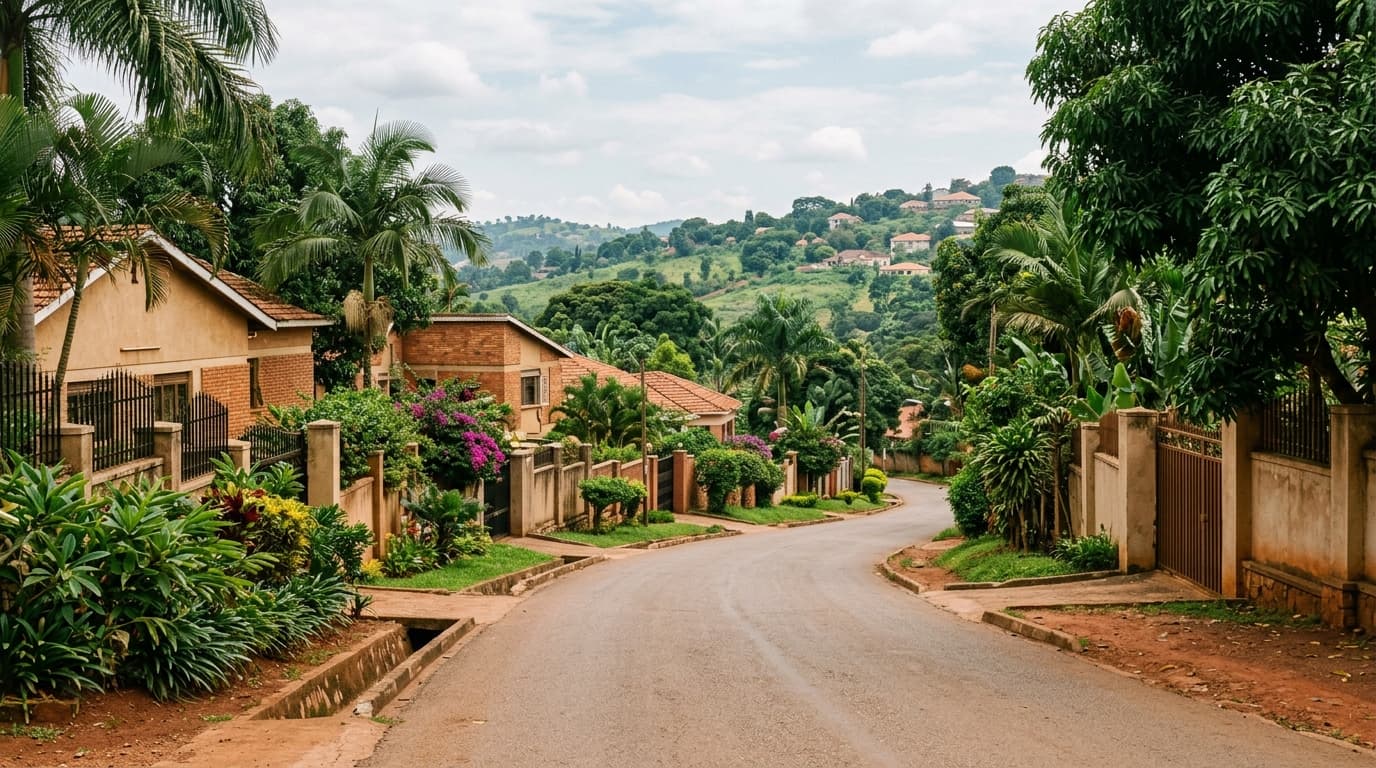
In short
Uganda requires a mandatory e-visa for every French national (official portal visas.immigration.go.ug, 50 USD for a single entry, on-arrival visas having been suspended since 1 July 2021), as well as a mandatory yellow fever vaccination certificate on entry; a single East Africa Tourist Visa (100 USD, 90 days, multiple entries) also allows travel between Kenya, Uganda and Rwanda. France Diplomatie describes taking out an assistance contract covering medical expenses, surgery, hospitalisation and medical repatriation as essential, since the embassy covers no costs under any circumstances. No social security agreement between France and Uganda has been identified: CLEISS lists only 16 African countries and territories with such agreements, and Uganda is not among them. The country currently has no generalised national health insurance scheme — a National Health Insurance Scheme (NHIS) bill was passed by the Ugandan Parliament in March 2021 but has still not entered into force — so both the public sector (Mulago National Referral Hospital, under heavy strain) and Kampala's private sector (International Hospital Kampala/C-Care IHK, Nakasero Hospital) essentially run on direct payment for care. Without suitable cover, costs remain entirely at the patient's expense.
Key figures
- 475 French nationals registered with the consular register in 2025, up from 460 the previous year (+3.26%).
- Life expectancy at birth: about 68.5 years in 2024 (World Bank).
- Current health expenditure: about 4.2% of GDP in 2023 (World Bank).
- Mulago National Referral Hospital: official capacity of 1,790 beds, but occupancy regularly above 100%, with several thousand patients treated at once according to the sources consulted.
Local healthcare system
Uganda currently has no generalised national health insurance scheme along the lines of Kenya's NHIF/SHIF or Rwanda's Mutuelle de Santé. A National Health Insurance Scheme (NHIS) bill, championed since 2019 by a Ugandan MP, was passed by Parliament in March 2021, with a contribution envisaged at around 15,000 UGX (about 4 USD) per month for members; the law has still not entered into force according to the most recent sources (2025), with healthcare funding in practice relying on the state budget, international donors and above all direct out-of-pocket payment by patients, which remains the norm for the vast majority of the population.
The public sector reference point is the Mulago National Referral Hospital, in Kampala, the country's largest hospital with an official capacity of 1,790 beds (900 at Lower Mulago, 700 at Upper Mulago), though several sources report occupancy regularly above 100%, with sometimes more than 3,000 patients treated at once and patients placed on the floor for lack of available beds. The private sector, concentrated in Kampala, is markedly better equipped and serves as the reference for the expat community: the International Hospital Kampala (IHK), renamed C-Care IHK after its partial acquisition by the CIEL group in 2015, around 100 beds, performed the country's first open-heart surgery there and offers a wide range of specialties (neurosurgery, cardiology, oncology, robotic surgery). The Nakasero Hospital, opened in 2009 and owned by a collective of doctors, also has an emergency department and an intensive care unit. Without suitable cover, the costs of these private facilities remain entirely at the patient's expense, both facilities operating on direct payment or a private insurance guarantee.
Legal and visa obligations
- Mandatory e-visa for every French national, to be applied for before departure on the official portal visas.immigration.go.ug: 50 USD for a single entry. The on-arrival visa has been suspended since 1 July 2021; every application must therefore be made online before boarding. Tourist visa extensions are handled locally, with the immigration authorities.
- East Africa Tourist Visa: a single visa covering Kenya, Uganda and Rwanda, valid for 90 days with multiple entries, for 100 USD.
- Yellow fever: presenting a yellow fever vaccination certificate is mandatory for entry into Ugandan territory, regardless of origin — unlike neighbouring countries such as Rwanda, where this requirement only applies in the case of transit through an at-risk area.
- France Diplomatie describes taking out an assistance contract covering medical expenses, surgery, hospitalisation and medical repatriation as essential, since these costs can under no circumstances be covered by the French embassy on site.
- Malaria: the country is classified as zone 3, with a constant risk as soon as you leave Kampala; suitable antimalarial prophylaxis is strongly recommended.
- Other vaccinations to assess depending on profile and season: hepatitis A and B, typhoid fever, meningitis ACWY (particularly in the dry season), tuberculosis (children under 15), rabies, chikungunya, dengue.
- Extended stay or professional activity: a work or residence permit must be obtained from the Directorate of Citizenship and Immigration Control, on the same portal as the e-visa, depending on the length and purpose of the stay.
No specific fine has been identified for lacking health cover, but Kampala's private facilities in practice require a payment guarantee before any admission outside a life-threatening emergency.
Cost of some medical procedures
Orders of magnitude from specialised sources, not official fee schedules.
| Procedure | Public sector | Private sector |
|---|---|---|
| E-visa (single entry, visas.immigration.go.ug) | — | 50 USD |
| East Africa Tourist Visa (90 days, Kenya/Uganda/Rwanda, multiple entries) | — | 100 USD |
| GP consultation (private sector, Kampala) | — | rate varies by facility, not publicly disclosed (no national fee schedule identified) |
| Night of hospitalisation (International Hospital Kampala / C-Care, Nakasero Hospital) | — | rate varies by facility and room type, not publicly disclosed |
| Routine care, public sector (Mulago National Referral Hospital) | access in principle universal, costs not reliably disclosed publicly; capacity under heavy strain (occupancy regularly above 100%) | — |
| National Health Insurance Scheme (NHIS) contribution, for guidance only | about 15,000 UGX/month (≈ 4 USD) envisaged by the law passed in 2021, scheme not yet in force | — |
| Medical evacuation (air ambulance) | — | rate not publicly disclosed (quote depends on provider and destination) |
Social security agreements with France
No bilateral social security agreement between France and Uganda has been identified. CLEISS lists only 16 African countries and territories that have signed this type of agreement with France (Algeria, Benin, Cameroon, Cape Verde, Congo, Côte d'Ivoire, Gabon, Madagascar, Mali, Morocco, Mauritania, Mayotte, Niger, Senegal, Togo, Tunisia) — Uganda is not among them. In the absence of any agreement, there is no coordination for healthcare, maternity, old age or family benefits between the two systems.
- No French rights-maintenance form applies in Uganda.
- Registering with CFE or taking out international private insurance are the only routes to cover recognised by a French system, regardless of profile.
- Uganda currently has no national health insurance scheme in force (the National Health Insurance Scheme bill, passed in 2021, has still not entered into application): no local option can therefore substitute for cover recognised in France.
Which insurance for my profile
General matrix — does not recommend any specific product or insurer.
| Profile | Regulatory constraint | Points of attention |
|---|---|---|
| Tourist / short stay | Mandatory e-visa before departure (50 USD) and yellow fever vaccination certificate required on entry | Travel insurance with repatriation strongly recommended by France Diplomatie, as the embassy covers no costs |
| Student | No specific legal health insurance requirement identified beyond the e-visa and the host institution's own requirements | Check the university's or exchange programme's requirements before departure; health and repatriation cover recommended |
| Seconded employee / expat | Work or residence permit to be obtained depending on the length and purpose of the stay; no explicit health insurance requirement identified for this permit | No bilateral health agreement and no national health insurance scheme in force: international private cover or CFE essential; the employer sometimes offers supplementary local private insurance |
| Retiree | No health cover via a bilateral agreement, in the absence of one | CFE or international private insurance essential, with medical repatriation included |
| Volunteer / humanitarian or NGO staff | No specific scheme identified; insurance terms generally set by the sending organisation, with many international and humanitarian agencies present in Uganda | Check that the cover offered by the host organisation includes hospitalisation and medical evacuation, as the local public sector is not sized for this profile |
Hospitals and care network
- Kampala — International Hospital Kampala (IHK), renamed C-Care IHK: leading private facility, around 100 beds, opened in 2000 in the Namuwongo neighbourhood, including the first open-heart surgery performed in Uganda, wide range of specialties (neurosurgery, cardiology, oncology, robotic surgery).
- Kampala — Nakasero Hospital: private facility opened in 2009 on Nakasero Hill, more than 100 beds, emergency department and intensive care unit, owned by a collective of around twenty doctors.
- Kampala — Mulago National Referral Hospital: the country's main public hospital, official capacity of 1,790 beds, but occupancy regularly above 100% according to the sources consulted.
Practical steps
- Before departure, regardless of purpose: apply for the e-visa on visas.immigration.go.ug and take out insurance or an assistance contract covering hospitalisation and repatriation, given the absence of any France-Uganda coordination.
- Before departure: get vaccinated against yellow fever at an approved centre, as this certificate is required on entry into the country regardless of origin, and consult a vaccination centre to assess the need for the other recommended vaccines (hepatitis A/B, typhoid fever, meningitis ACWY, rabies) and antimalarial prophylaxis (zone 3).
- For an extended stay or professional activity: start work or residence permit procedures with the Directorate of Citizenship and Immigration Control well in advance.
- Voluntary enrolment with CFE recommended in the absence of any healthcare coordination and of a national health insurance scheme in force.
- Within 6 months of arrival: register with the roll of French nationals living abroad, at the French Embassy in Kampala.
Frequently asked questions
Do you need a visa to enter Uganda from France?
Yes, a mandatory e-visa is required for every French national, to be applied for before departure on the official portal visas.immigration.go.ug (50 USD for a single entry): the on-arrival visa has been suspended since 1 July 2021. A single East Africa Tourist Visa (100 USD, 90 days) also allows travel between Kenya, Uganda and Rwanda.
Is yellow fever vaccination mandatory for Uganda?
Yes: presenting a yellow fever vaccination certificate is mandatory for entry into Ugandan territory, regardless of the traveller's origin.
Is there a national health insurance scheme in Uganda?
No, not yet in force: a National Health Insurance Scheme (NHIS) bill was passed by the Ugandan Parliament in March 2021, with a contribution envisaged at around 15,000 UGX (4 USD) per month, but it had still not entered into application according to the most recent sources. Healthcare funding therefore relies mainly on direct out-of-pocket payment for care.
Does French social security coordinate healthcare with Uganda?
No: no bilateral social security agreement between France and Uganda has been identified. CLEISS lists only 16 African countries and territories with such agreements, and Uganda is not among them; there is therefore no healthcare coordination between the two systems.
Where to get treatment in Kampala for a serious need?
International Hospital Kampala (IHK/C-Care) and Nakasero Hospital are the private facilities most cited for expats. Mulago National Referral Hospital is the public sector reference point, but its occupancy regularly exceeds 100% of its official capacity.
Moving to Uganda? Get a quote
Written by Expavy
Sources
- France Diplomatie — Uganda, Entry and residence
- France Diplomatie — Uganda, Health
- France Diplomatie — Global register of French nationals abroad (carte-registre)
- CLEISS — Country factsheets (list of agreement countries, Uganda not included)
- Uganda e-Visa — official portal (Directorate of Citizenship and Immigration Control)
- World Bank — Life expectancy at birth, Uganda
- World Bank — Current health expenditure (% of GDP), Uganda
- Makerere University School of Public Health — National Health Insurance Scheme, technical brief (August 2025)
- P4H Network — Parliament of Uganda passes the national health insurance (NHI) bill
- Wikipedia — International Hospital Kampala
- Wikipedia — Nakasero Hospital
- Mulago National Referral Hospital — official site