Country guide — Africa and the Indian Ocean
 Expat insurance and health insurance in Guinea-Bissau
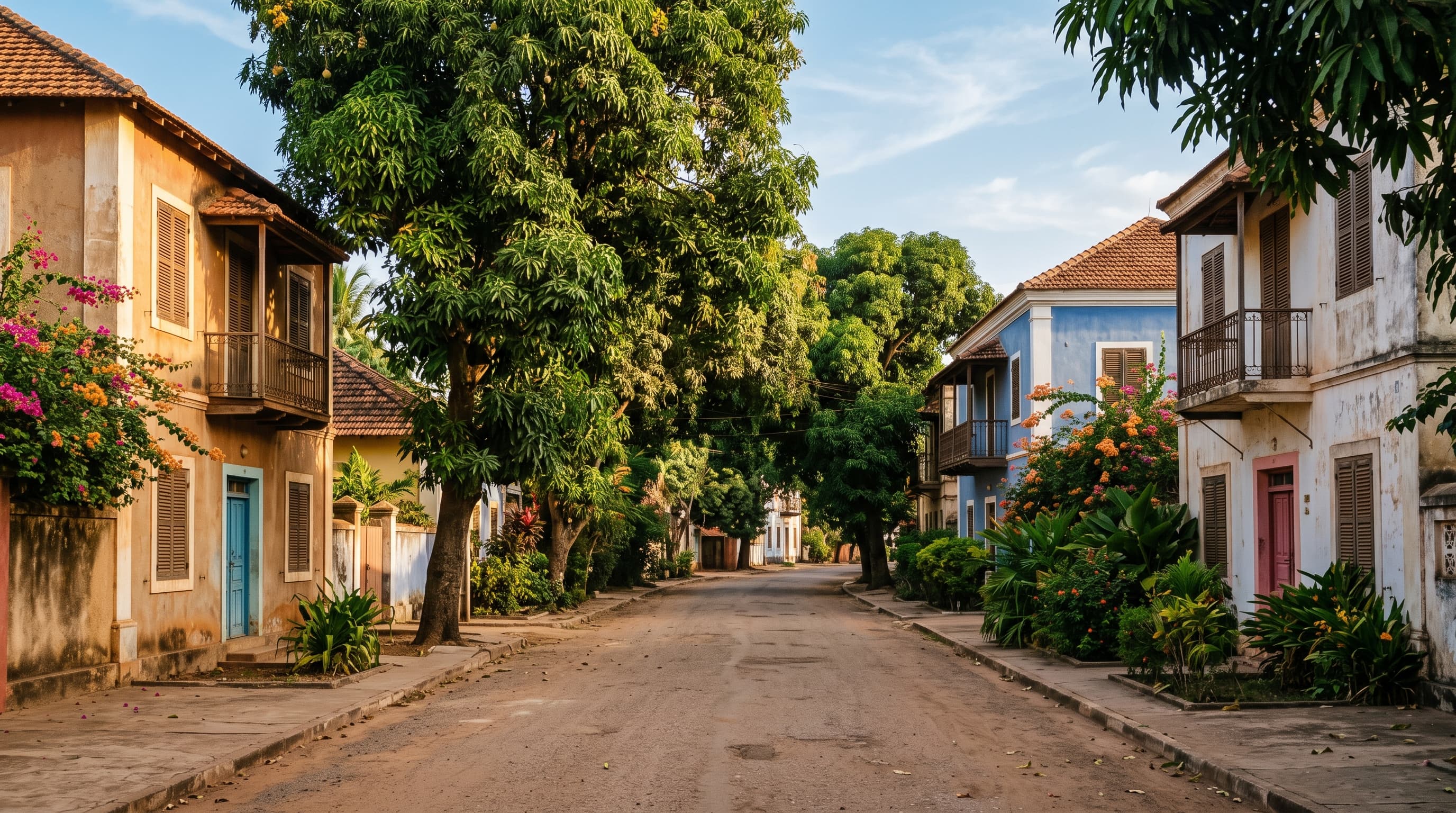
In short
An entry visa is mandatory for a French national travelling to Guinea-Bissau — in principle to be applied for at the embassy in Paris, though an emergency visa at Bissau airport remains possible if the immigration department has been notified in advance. France Diplomatie considers a contract covering medical expenses, surgery, hospitalisation and medical repatriation essential, as the embassy does not cover any costs locally: the country has no emergency services suited to a serious accident and no air ambulance based in Bissau, the nearest being in Dakar (around 1h30 by air, or a minimum of 12 hours by road). No social security agreement links France and Guinea-Bissau, which does not appear on CLEISS's list of bilateral agreements in force. The Bissau-Guinean INSS (Instituto Nacional de Segurança Social), created in 2002, in principle covers sickness, maternity, disability, death, unemployment, workplace accidents and old age for affiliated workers, but its accessibility for a foreign resident without local employment could not be confirmed on any official source dedicated to expats. French residents rely on the very small number of private clinics in Bissau for everyday care, with systematic evacuation to Dakar, Portugal or another country with genuine medical facilities for any serious condition.
Key figures
- 116 French nationals registered with the consular register in 2025 (190 in 2024, -38.95% — one of the sharpest drops in the register for the region).
- Life expectancy at birth: 64.25 years in 2024.
- Current health spending: 82.14 USD per capita in 2023, 8.82% of GDP.
Local healthcare system
The Bissau-Guinean health system is among the least equipped in the region according to the sources consulted. France Diplomatie is categorical: "there is no emergency service in Guinea-Bissau suited to a serious accident", and no air ambulance is based in Bissau, the nearest being in Dakar (around 1h30 by air, or a minimum of 12 hours by road for a land evacuation). The INSS (Instituto Nacional de Segurança Social), created in January 2002, in principle manages sickness, maternity, disability, death, unemployment, workplace accident and old-age cover for affiliated workers, but its accessibility for a foreign resident without local employment could not be confirmed on any official source dedicated to expats. The public hospital reference network rests on Simão Mendes National Hospital in Bissau, the country's largest and oldest facility, but specialised guides for expats describe very limited public provision and near-systematic reliance on the capital's few private clinics for everyday care — clinics not subject to consistent quality control according to the same sources. For any serious condition, surgery, obstetric complication or life-threatening emergency, the consistent recommendation from the guides consulted is evacuation to Dakar, Portugal or another country with full medical facilities.
Legal and visa obligations
- Mandatory entry visa, in principle applied for at the Guinea-Bissau embassy in Paris before departure. France Diplomatie notes that an emergency visa can be obtained at Bissau airport if the immigration department has been notified in advance, in case of emergency or if the country of departure has no Bissau-Guinean diplomatic representation; fees may then exceed those of the embassy and be required in cash.
- Yellow fever vaccination mandatory, to be done before departure at an approved centre, according to France Diplomatie.
- Declaration of goods and compliance with exchange controls on arrival; for pets, identification, rabies protection and a health certificate less than a week old are required.
- No health insurance is formally required on entry, but a contract covering medical expenses, surgery, hospitalisation and medical repatriation is considered essential by France Diplomatie, as the embassy covers no medical costs locally.
- CFE recommended in addition to private insurance, with a subsidised category available on application for consular assessment for lower-income households.
Heightened health vigilance: cholera is endemic in Guinea-Bissau (transmitted through contaminated water or food, particularly undercooked seafood), malaria circulates year-round, and outbreaks of dengue, chikungunya and zika are possible. Health authorities officially declared an mpox outbreak in summer 2026; France Diplomatie recommends following protective measures and mentions possible vaccination before departure for the most exposed travellers. Vaccinations recommended depending on the case against hepatitis A and B, typhoid fever, ACWY meningitis (dry season, November to June) and tuberculosis for children under 15. The rabies vaccine can be very hard to obtain quickly on site in case of a bite or scratch. Tap water is not safe to drink: only bottled water with a sealed cap, or water made safe by filtration, boiling or disinfection, is recommended.
Cost of some medical procedures
Orders of magnitude from specialised sources, not official fee schedules.
| Procedure | Public sector | Private sector |
|---|---|---|
| GP consultation (private sector, Bissau) | — | rate varies by facility, not publicly disclosed |
| Specialist consultation (private sector) | — | rate varies by facility, not publicly disclosed |
| Hospitalisation (per day, private sector) | — | rate varies by facility, not publicly disclosed |
| Consultation / hospitalisation, public sector (Simão Mendes National Hospital) | rate varies by facility, not publicly disclosed | — |
| Medical evacuation to Dakar or Europe | — | rate varies by insurer and severity, not publicly disclosed — generally several tens of thousands of euros without cover |
Social security agreements with France
No social security agreement currently links France and Guinea-Bissau: this country does not appear on CLEISS's list of bilateral agreements in force, unlike several other West African countries (Senegal, Benin, Mali, Togo, Mauritania, Côte d’Ivoire).
- In the absence of an agreement, no coordination exists between the French and Bissau-Guinean social security schemes: neither totalisation of insurance periods nor cross-border coverage of sickness, maternity, old-age or workplace-accident benefits.
- A French resident therefore cannot rely on any agreement mechanism to assert their rights locally; affiliation with the CFE or international health insurance remains the only way to obtain recognised cover for care received in Guinea-Bissau.
Which insurance for my profile
General matrix — does not recommend any specific product or insurer.
| Profile | Regulatory constraint | Points of attention |
|---|---|---|
| Working holiday visa | No France-Guinea-Bissau agreement identified | Not applicable |
| Student | No social security agreement; no specific legal obligation for students identified beyond the general absence of an insurance requirement | Health/repatriation insurance strongly recommended, as the country has no emergency service suited to a serious accident |
| Seconded employee / expat | No social security agreement; INSS affiliation in principle depends on local employment, its access for a seconded employee could not be confirmed | International health insurance or CFE essential, particularly to cover medical evacuation to Dakar or Europe |
| Retiree | No agreement coordination, either for the pension or for everyday health care | CFE or private insurance essential, as local medical provision is considered very limited by the sources consulted |
| Family with children | Yellow fever vaccination mandatory for all members; tuberculosis recommended for children under 15 | Check each member's cover and medical evacuation, as the INSS is not confirmed as accessible to foreign residents without local employment |
Hospitals and care network
- Simão Mendes National Hospital (Bissau) — the country's largest and oldest public facility, more than 500 beds, but resources considered limited by the sources consulted.
- Madrugada Clinic (Bissau) — one of the few private facilities cited by specialised guides for expats.
- Cumura Hospital (outskirts of Bissau) — private facility with relatively accessible rates according to the same sources.
- No facility in Bissau is considered to have sufficient medical capacity for serious emergencies: evacuation to Dakar, Portugal or another equipped country.
Practical steps
- Before departure: apply for a visa at the Guinea-Bissau embassy in Paris, mandatory yellow fever vaccination, insurance or assistance contract covering hospitalisation, surgery and medical repatriation.
- Consult a doctor and/or an international vaccination centre well in advance, and put together a personal medicine kit (medication in its original packaging, with prescription) given the limited local pharmaceutical supply.
- Registration recommended with the roll of French nationals living abroad (French embassy in Bissau).
- Voluntary CFE affiliation recommended in the absence of a social security agreement between France and Guinea-Bissau; subsidised category available on application through the embassy's social services for lower-income households.
Frequently asked questions
Is health insurance mandatory to move to Guinea-Bissau?
Not legally, but France Diplomatie considers it essential: the embassy covers no medical costs and the country has no emergency service suited to a serious accident.
Does French social security cover me in Guinea-Bissau?
No: no social security agreement links France and Guinea-Bissau, unlike several neighbouring West African countries such as Senegal or Mali. No coordination mechanism exists between the two schemes.
Can a French resident affiliate with the Bissau-Guinean INSS?
Affiliation in principle depends on salaried employment in Guinea-Bissau or local self-employed status; its accessibility for a foreign resident without local employment could not be confirmed on any official source dedicated to expats.
Is a visa required to travel to Guinea-Bissau?
Yes, an entry visa is mandatory, in principle to be applied for at the Guinea-Bissau embassy in Paris. An emergency visa at Bissau airport remains possible if the immigration department has been notified in advance.
What to do in case of a serious medical problem in Bissau?
Medical evacuation to Dakar (around 1h30 by air, as no air ambulance is based in Bissau), Portugal or another country with full medical facilities is the consistent practice for serious cases — hence the importance of insurance explicitly covering medical repatriation.
Moving to Guinea-Bissau? Get a quote
Written by Expavy
Sources
- France Diplomatie — Guinea-Bissau, Travel advice, Health
- France Diplomatie — Guinea-Bissau, Travel advice, Entry and stay
- France Diplomatie — Register of French nationals living abroad (carte-registre)
- CLEISS — Bilateral social security agreements in force
- World Bank — Life expectancy at birth, Guinea-Bissau
- World Bank — Current health expenditure (% of GDP and per capita), Guinea-Bissau
- CIPRES — National social security fund of Guinea-Bissau (INSS)
- Wikipedia — Hospital Nacional Simão Mendes
- Cyril Jarnias — Health care for expats in Guinea-Bissau, complete guide and practical advice